Drawing Vectorization: How It Works

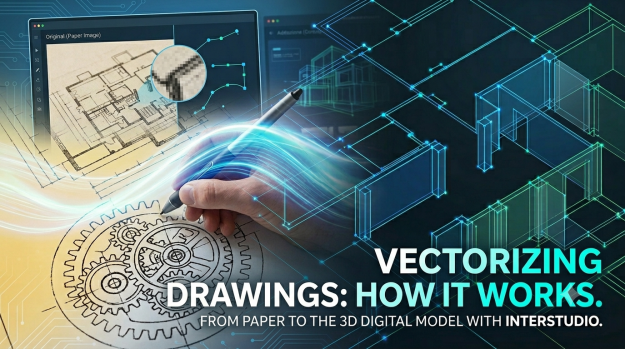
How Vectorization Works Vectorization transforms a raster image into editable vector curves and polylines. In practice, the process takes the selected image, converts it into a binary representation, removes noise, extracts the central axis of the strokes, and finally simplifies the resulting geometry to produce cleaner, lighter vector elements. From Image to Binary The first…
DigiCad 3D 26 – released the new version

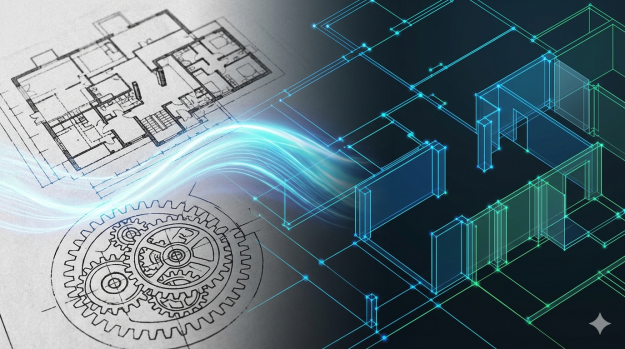
DigiCad 3D eliminates perspective warping, eliminates optical warping, calibrates old maps, imports and exports in a variety of formats, converts PDFs to drawings, connects with Google Maps, and treats images in a variety of ways. With the release of the 26 FC version, other important features are added to the list. Vectorization drawings This is…

Light management in Domus.Cad

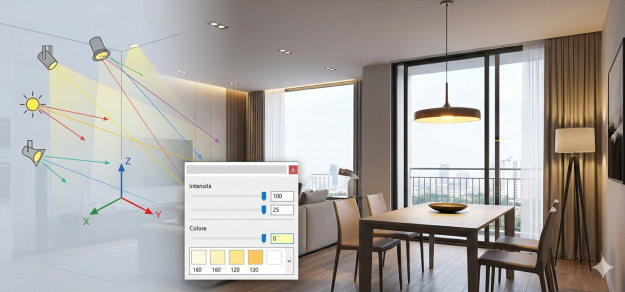
In rendering programs, such as Domus.Cad and others, the final image rendering depends essentially on two factors: light sources, which define how the scene is illuminated, and materials, which determine how light is absorbed, reflected, and scattered by surfaces. In more advanced rendering systems, such as Domus.Cad’s OspRay advanced rendering, other factors intervene for a…

Domus.Cad 26 – Rendering and Clouds

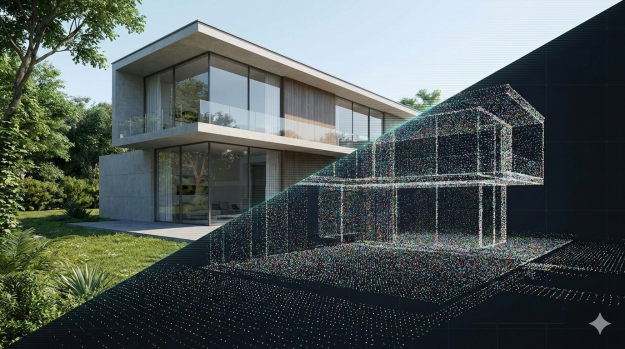
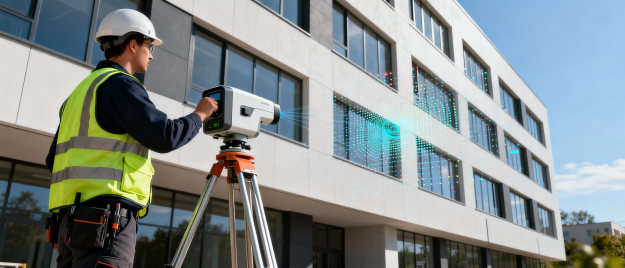
Version 26 of Domus.Cad Pro and Std, the Italian BIM architectural design program, has been released, allowing you to design quickly using the most advanced software technologies. In this version, the main new features concern the management of advanced rendering and point clouds (Point Clouds). Other new features include image processing, material management, optimization and…